
Hus Smart — What if insurance could prevent the damage from happening in the first place?

The context
Gjensidige traces its origins to 1816, when the first of what would become around 200 local fire insurance groups was established across Norway. These weren’t just insurers; they often ran the local fire brigade and chimney sweep service too. Protection was active, local, and shared. The warden, or vekter, became Gjensidige’s logomark in 1932 and has remained so ever since: someone who watches over you, not just compensates you afterwards.
Two centuries on, that founding idea had largely been overtaken by the logic of modern insurance: an annual premium, an invisible relationship, and a service that only becomes real when something has already gone wrong.
Hus Smart was, in a sense, a return to the original idea — and the question that set it in motion was a simple but significant one: what if insurance could prevent the damage from happening in the first place?
The opportunity
Home insurance, as a category, is largely invisible to customers. You pay your monthly premium, you hope nothing happens, and the only time the relationship becomes real is when you’re already in distress. The alarm industry, by contrast, had built something different — a daily touchpoint, a persistent sense of being looked after.
That gap was the opportunity. No major European insurer had combined active prevention with passive coverage into a single, integrated product. Gjensidige had the customer relationships and the claims data to understand where home damage really came from. The question was whether a new kind of service could be designed around preventing it.
The approach
The team worked iteratively from the start, with customer involvement built into every sprint rather than bolted on at the end. Early stages were deliberately exploratory — weekly user interviews running in parallel with sketching and prototyping, with ‘real’ people outside the team and organisation.
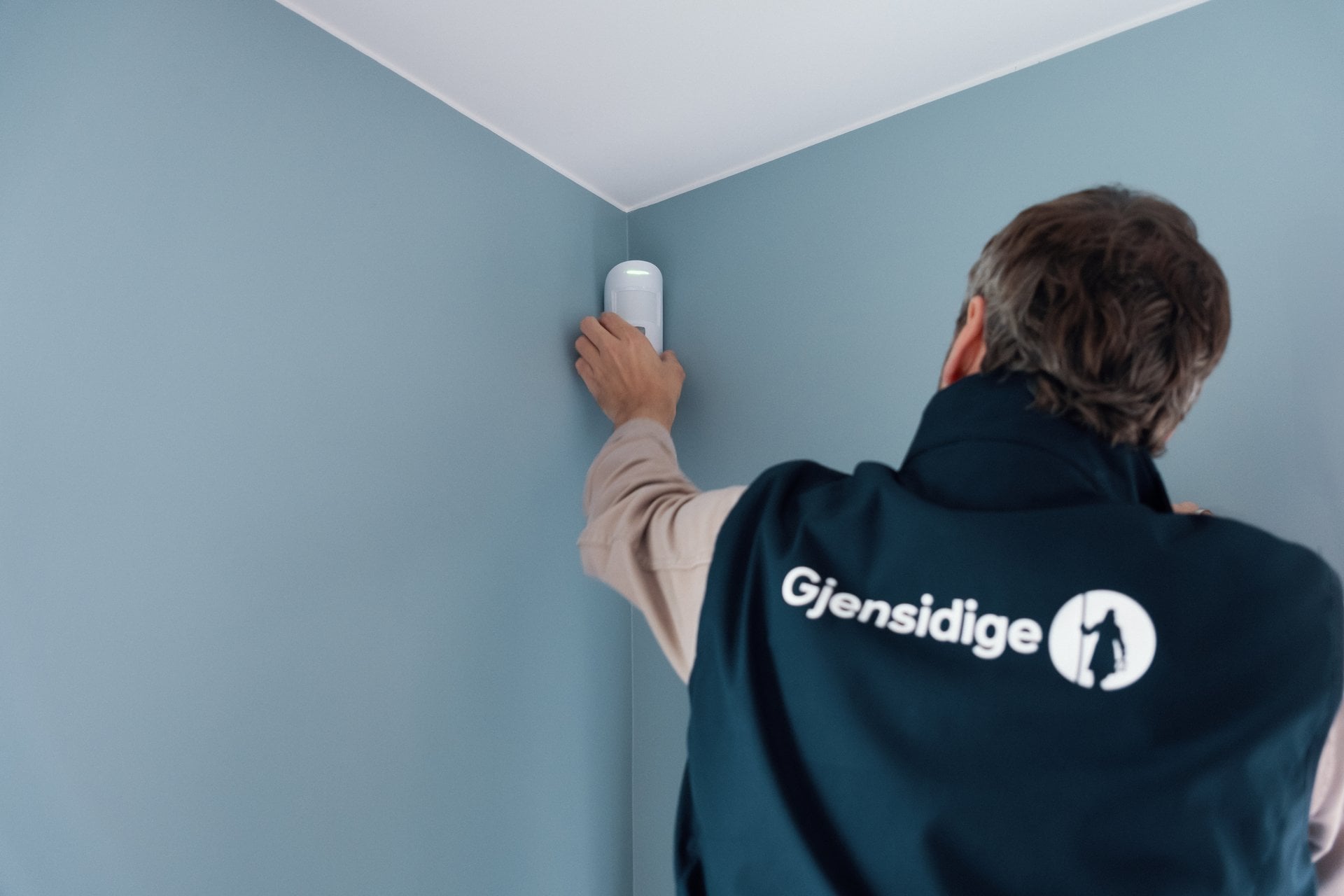
The cross-functional composition of the team shifted as the project matured. In the early concept phase, design led — synthesising user insight into a value proposition and service model. As the project moved into piloting, operational competency became critical: Hus Smart required an entirely new logistics and value chain, from hardware sourcing and FG-certified installation to 24-hour alarm monitoring through a dedicated operations partner.
What emerged from this process was not just a product, but a new service architecture. The core insight — that customers needed to feel protected in the moment, not just reimbursed after the fact — shaped every design decision, from the hardware chosen to the app experience to the pricing model.
The service
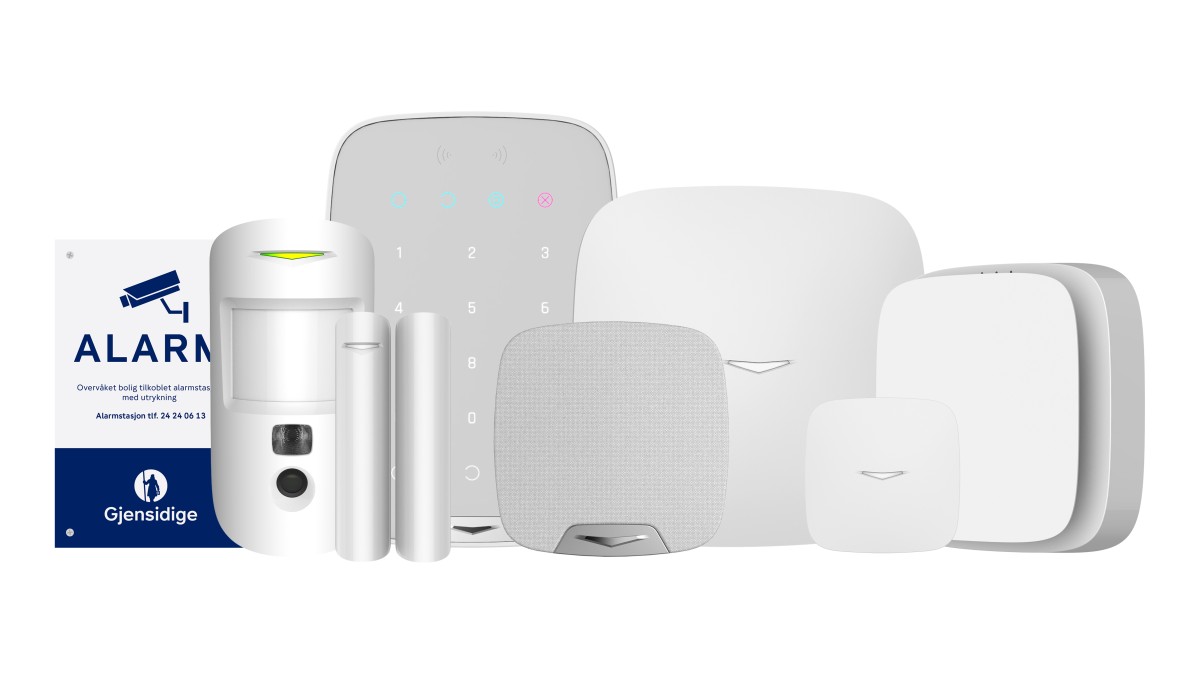
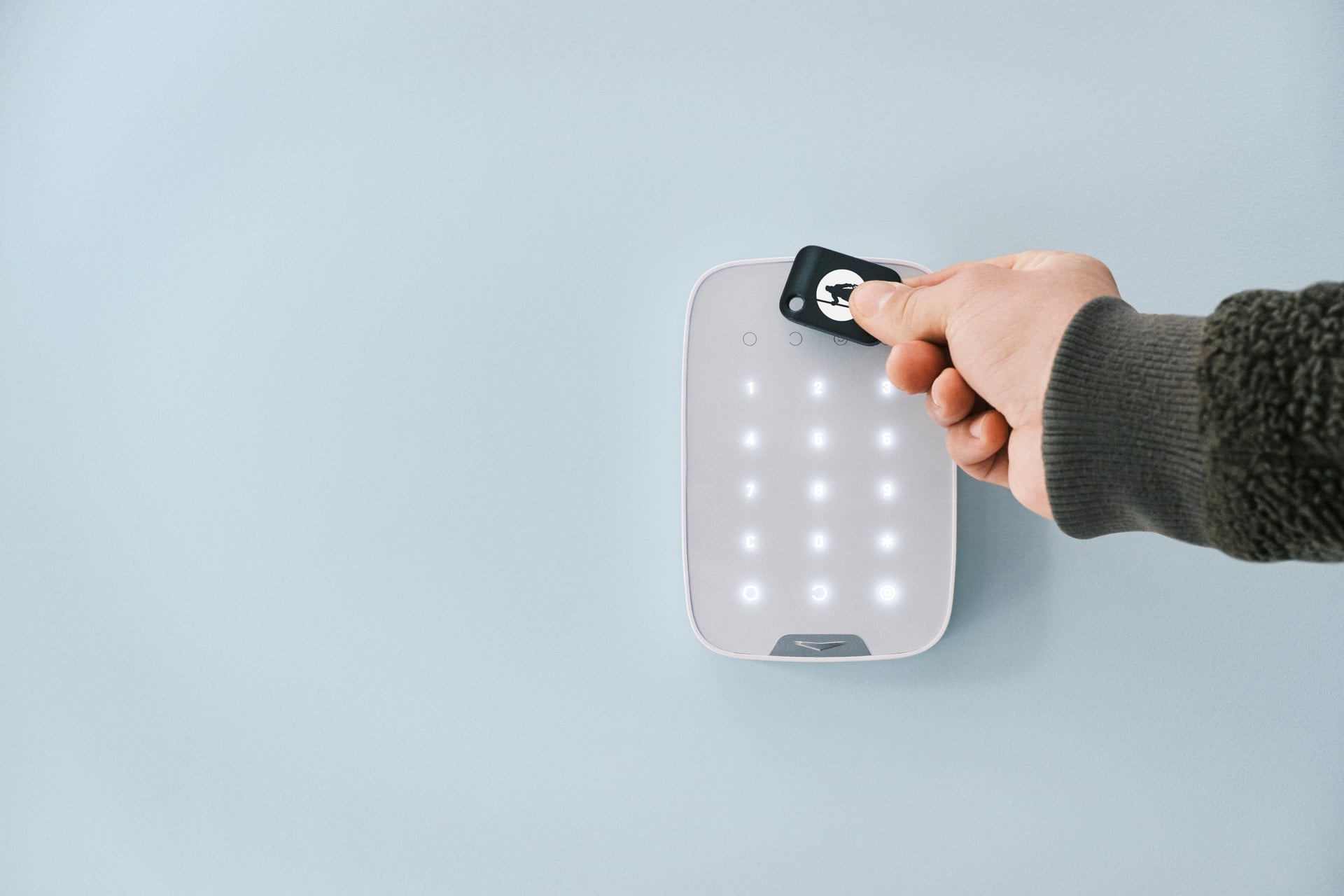
Hus Smart combines a home insurance policy with an integrated smart alarm system: serially connected smoke detectors with optical and thermal detection, a water leakage sensor, and an optional intruder alarm. All components connect to a round-the-clock alarm station operated by REDGO (formerly Falck), which can contact the customer, confirm the situation remotely, and alert emergency services if needed.
The hardware — award-winning components from Ajax, manufactured in Ukraine and FG-certified for Norwegian alarm standards — was chosen for its minimalist design and reliability. The leasing model means Gjensidige takes responsibility for upgrades over time, removing the typical friction of technology ownership from the customer relationship.
The product is structured as a modular pick-and-choose offering: customers decide whether they want fire and water protection only, or whether to add intruder detection. This flexibility — unusual in the traditional alarm market — was a direct response to what we heard in user research.
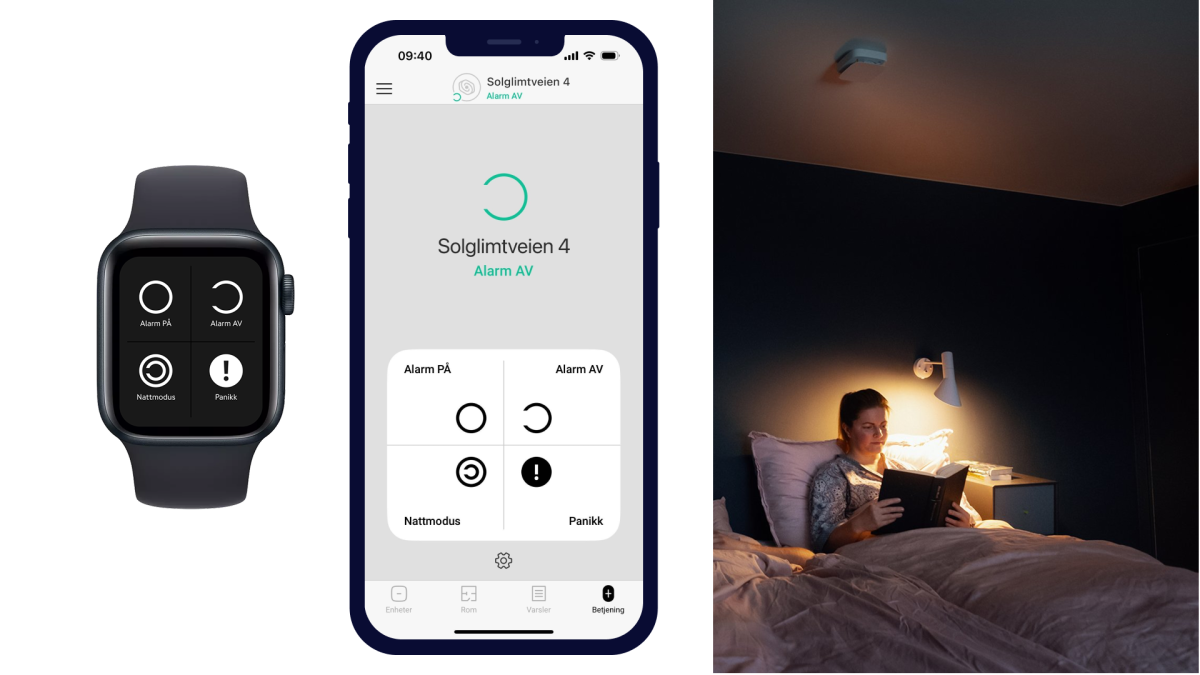
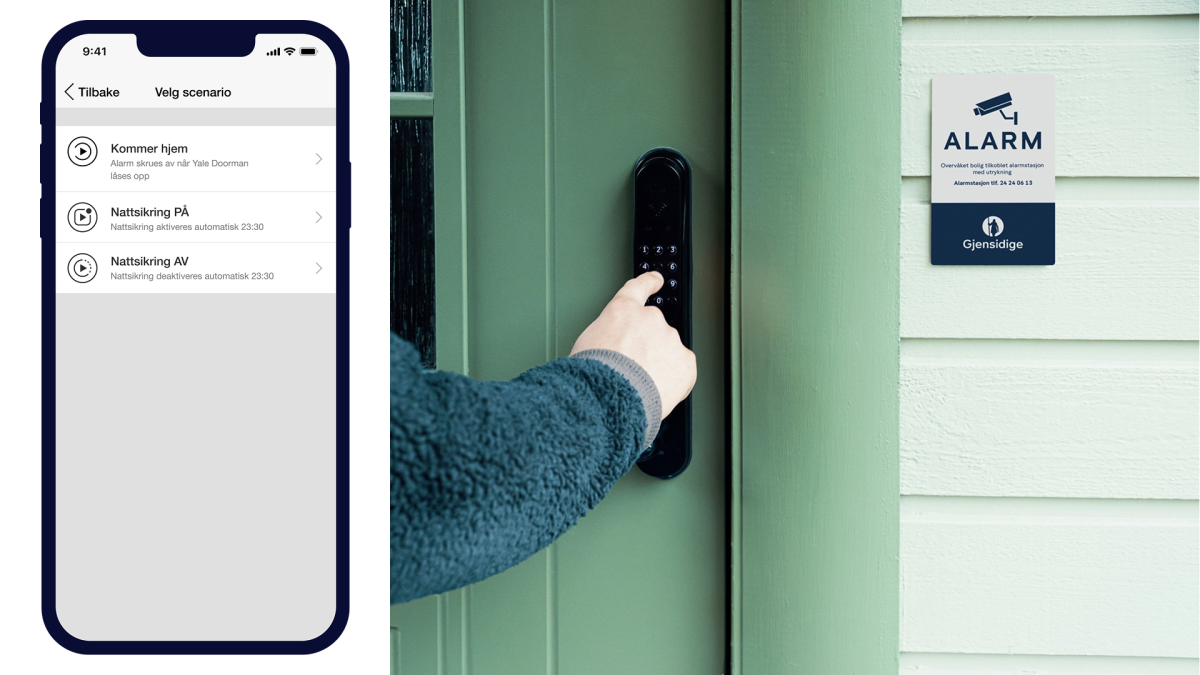
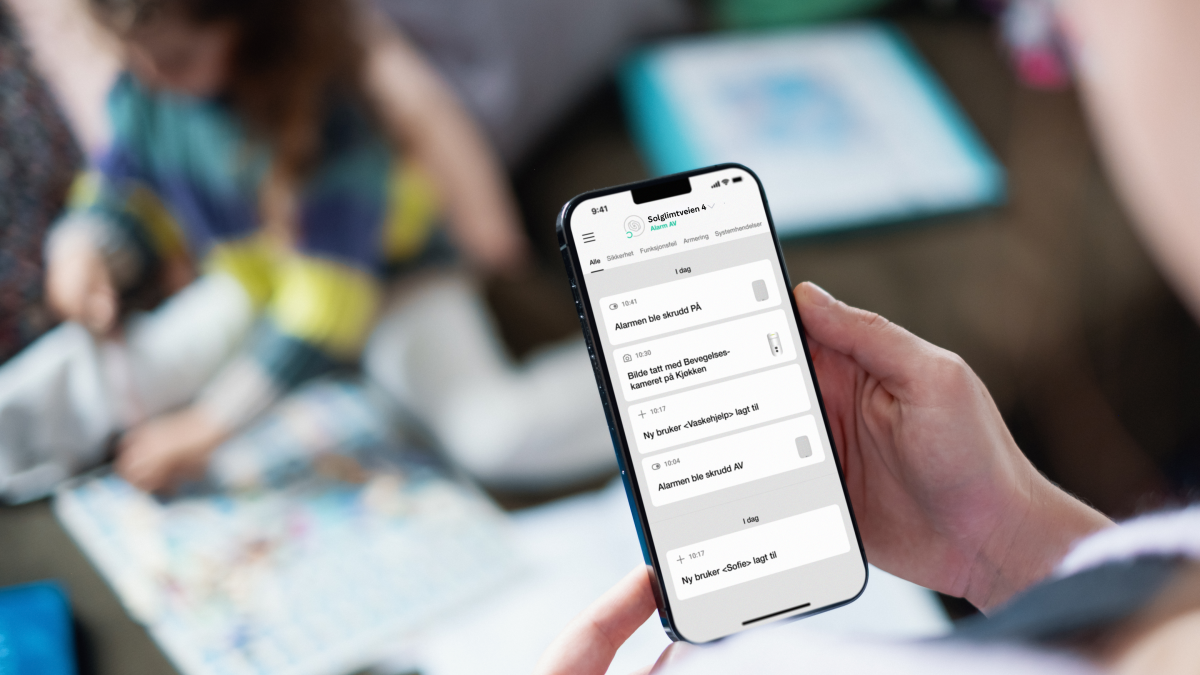
A dedicated app gives customers real-time visibility of their home’s status: temperature readings, sensor alerts, alarm history. When something unusual happens, the customer and the alarm station are notified simultaneously.

Outcome
The MLS — Minimum Lovable Service — launched in January 2024, refining the product and beginning the process of scaling to the broader market. Today Hus Smart has over 10,000 customers — a meaningful foothold in a market where the traditional alarm industry had long held a comfortable duopoly.
The most compelling validation came not from metrics, but from the field. A homeowner near Bergen who used her property as a holiday rental was woken one night by an alert on her phone: an abnormal temperature rise had been detected in the basement. A guest had left an old electric heater running under drying laundry. The smoke detectors hadn’t triggered — there was no smoke yet. But the thermal sensors had caught it early enough for the alarm station to reach the homeowner, for the guest to be woken, and for the heater to be switched off before any damage occurred.
That is what the service was designed to do.
Reflections
Hus Smart asked Gjensidige to do something most large insurers don’t: invest in preventing the claims they’d otherwise pay out on. That required a different relationship with the customer — one built on ongoing presence rather than periodic contact — and a different commercial model, built around recurring service rather than annual premium renewal.
Part of my involvement was helping to establish the strategic direction that would take the service beyond its original scope. The rebranding to Smart forsikring wasn’t cosmetic — it reflected a deliberate platform strategy: a connected security layer that could be extended across Gjensidige’s wider product range. Contents insurance was the logical next step, with holiday cabin insurance following. The service was being designed to travel.
Central to that strategy was defining a North Star Metric: number of secured homes. It’s a deceptively simple measure, but the right one. The mutual value of the service — for Gjensidige and for the customer — is only fully realised at the moment a customer is paying for the service and connected to the alarm station. A home that is actively monitored is a home that is genuinely protected.
Building it meant navigating real tensions: between rapid iteration and the rigorous safety and regulatory standards that insurance demands; between what the technology could do and what customers would actually trust; between designing for the unknown first-time buyer and the existing policyholder.
“The most interesting product opportunities often lie at the boundary between two industries that have historically operated in parallel, never quite touching. And the most durable businesses are the ones that design for mutual value from the start.”
Haydn Evans